While Concern is Understandable, AI Offers Many Positive Opportunities Today

Whether your organization is gung-ho on artificial intelligence, deathly afraid of it, or somewhere in between, there’s a lot to think about—some of which might never have occurred to you. For example, what’s the best day to send a payment request to a specific company with a greater guarantee of payment success?
“AI can be used to proactively determine that in the past, when we have sent a payment to this account on a Friday, invariably it comes back with an R01 insufficient funds. But when you send it on a Monday or a Tuesday the payment is successful,” said Tapan Agarwal, SVP, Head of Payments, Intellect Design Arena, an AI-first financial technology firm.
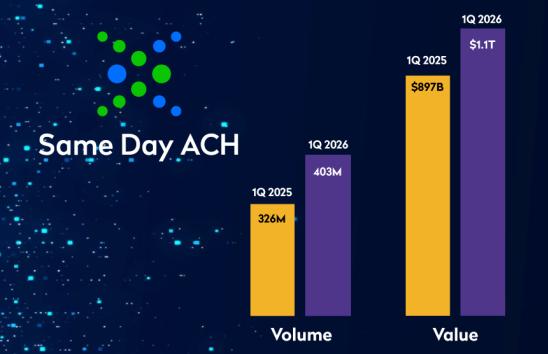
AI can also help with what Agarwal called “intelligent rail selection.” By looking at factors including the amount and purpose of the payment, and the reachability of the RDFI, AI can determine “the optimum payment rail,” whether it’s Same Day ACH, standard ACH, or something else, he said during the June 8 Smarter Faster Payments Remote Connect 2026 session “AI in Payments: Using Insights to Improve Processing and Enhance Client Service.”
And as a fraud fighting tool, Agarwal cautioned not to overlook AI. He used business email compromise as a prime example, where an email—supposedly from a supplier—comes in requesting a change to the account where payments are sent. Sometimes, it looks so authentic that a person can miss it.
“But generative AI, given its ability to read emails and read documents, would be able to catch a subtle difference in a note coming from a supplier on an invoice, and flag that as a potential fraud,” said Agarwal.
Tom Antony, Senior Product Consultant at Intellect Design Arena, said “payment data tells you more about the client’s business than almost anything else out there—who they pay, when they pay, what currencies.”
“Most banks have this data, and they don’t do anything at all with it,” said Antony. But with AI, “There is a big opportunity to turn it into very proactive client conversations, use it to foster anomaly detections, and give a structurally better service experience for the customer.”
Mark Dixon, Senior Consultant at Nacha Consulting, said AI can take the client servicing experience “from being more of a reactive approach to much more proactive, backed by strong data.”
“In order to make powerful decisions in this industry, and fast, we need good data, and we have to be able to use it in a meaningful way,” said Dixon.
And while the panelists believe strongly in the value of AI, they also said caution must be taken.
“You just need to identify one high value problem that you have,” said Antony, noting it could be anything from fraud monitoring to an operations bottleneck. “But make sure that the agent that you build has governance in place. And you prove that particular agent before you go on and build the next one.”
“The governance foundation, for me, is the most important aspect.”