The ACH Network is Moving the Economy—and Moving with It
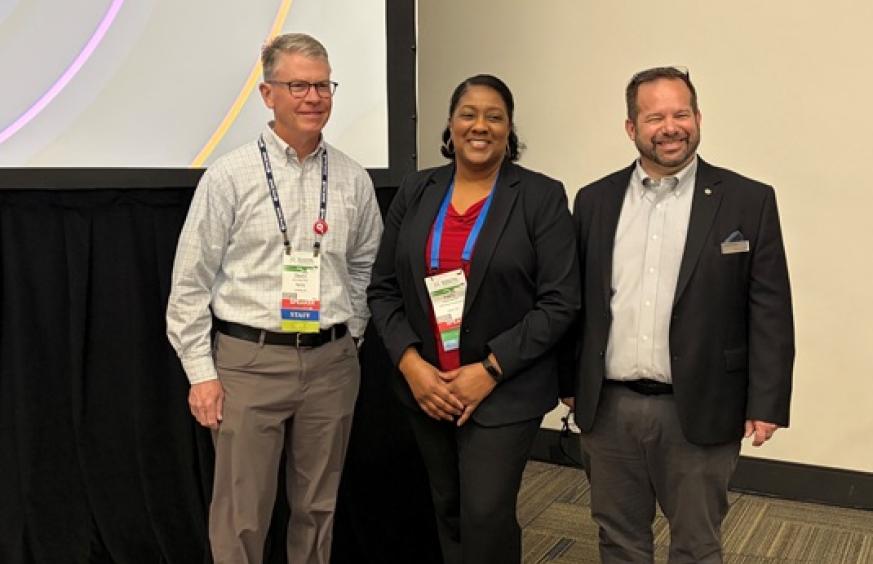
Devon Marsh, Kathleen Davis and Jason Carone at the Payments session “The Pulse of Payments: ACH’s Role in Powering the U.S. Economy”
SAN DIEGO—It operates quietly day and night. But underestimate the value of the ACH Network at your own peril.
“The ACH Network is critical to our economy. It’s as important to us as our highways, our power grids,” said Kathleen Davis, Operations Strategy Program Director, Federal Reserve Financial Services. “Think about a power grid going down and how that affects your daily lives. Think about that in terms of your payments and how you’d be impacted if something happened in that space.”
That vital role was in focus during the April 28 session “The Pulse of Payments: ACH’s Role in Powering the U.S. Economy” at Smarter Faster Payments 2026.
“It’s really big and it’s really reliable,” said Jason Carone, Senior Vice President, ACH Product Management, The Clearing House, which, along with the Federal Reserve is one of the two ACH Operators. “When you’re averaging 150 million transactions a day that’s a huge number. It’s got to be consistent. It’s got to be predictable.”
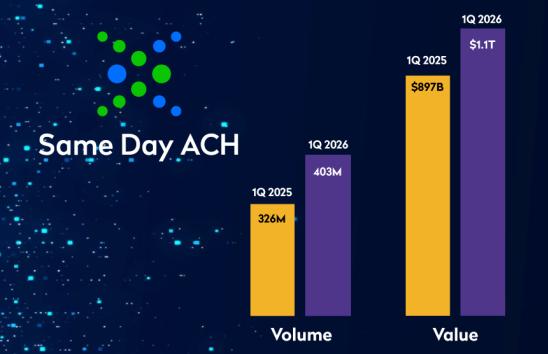
But at the same time, the ACH Network shouldn’t be stagnant. And it’s not. Case in point: the Same Day ACH per payment limit will increase from $1 million to $10 million next year, a move announced during Payments. Carone said the increase “is really trying to reflect demand across the industry. There’s a lot of new use cases.”
In fact, Carone said new use cases are a huge driver of total ACH Network growth, and he offered some examples.
“It used to be people got a paycheck every two weeks,” said Carone, but today “we’re seeing gig workers getting paid multiple times per day. You used to think of monthly rent payments, but now you’re seeing weekly rent payments.”
Davis noted that enhancing the ACH Network is a continuous process.
“The ACH Network is not just moving the economy. It’s moving with it,” said Davis.
“We’re watching the data to make sure that we know what’s happening,” said Davis. “We can’t predict the future, but we can look at the data and make good assumptions as to what changes need to be made to meet those needs.”
And while it’s easy to think of Nacha solely in terms of administering the ACH Network, Devon Marsh, Nacha Managing Director, ACH Network Rules and Risk Management, emphasized it’s a whole lot more.
“Advocacy is a role that Nacha carries out, promoting awareness of the ACH Network not just to users but to policymakers,” said Marsh, pointing to Nacha’s upcoming “Hill Day” on June 9, when Nacha members and staff visit with lawmakers on Capitol Hill.
“Education and accreditation is a big portion of what Nacha does, as well,” said Marsh. And while the Accredited ACH Professional (AAP) credential is ACH oriented, there are two other credentialing programs which extend beyond ACH: the Accredited Payments Risk Professional (APRP) and the Accredited Faster Payments Professional (AFPP). “They focus on other aspects of the payments ecosystem,” he said.
As Marsh noted, there’s a lot going on at Nacha.
“While the ACH Network transacted three times the value of GDP in 2025,” he said, “Nacha worked to influence the greater payments space through education and influence, providing the very infrastructure of the U.S. economy.”