A Solid Compliance Program Benefits Banks and Their Customers
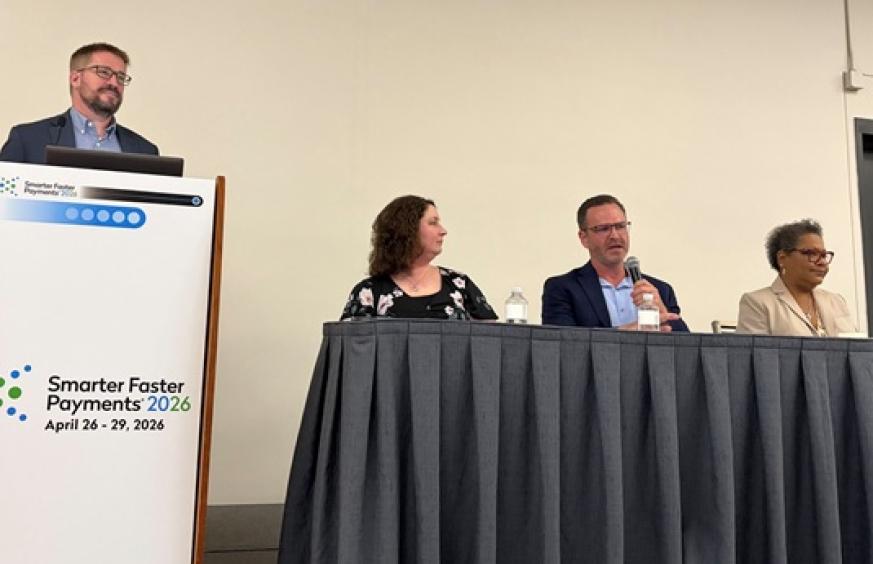
Jordan Bennett (at podium) chats with Sara Hentges, Brent Phillips and Shelli Pritchard about having strong ACH operational compliance
SAN DIEGO—At a session titled “Achieving ACH Operational Compliance: Keys to Building a Strong Compliance Program,” Brent Phillips made a key point early on.
“Compliance isn’t optional,” said Phillips, Director of Treasury Operations at b1BANK. “It is something that you have to do.”
“Making sure you’re on top of everything is really paramount to ensuring that you’re protected, that your originators are protected, and that overall, the enterprise is in a good place and has a good risk management framework,” Phillips told the April 28 session at Smarter Faster Payments 2026.
Bank examiners play a crucial role in checking compliance, as Shelli Pritchard knows firsthand.
“A lot of times, we as examiners get a bad rap,” said Pritchard, Payments Systems Analyst, Office of the Comptroller of the Currency. “When I go into financial institutions, I’m not going in trying to find something to write you up. I’m going to talk to the banker, to understand their risk appetite and how they are mitigating potential risk within their payment systems areas.”
Pritchard has heard stories of how banks have made payment systems changes during and after payment examinations. “I’m not your enemy. I’m there to ensure that the payments area has the framework needed to successfully perform payment systems functions in a safe and sound manner,” said Pritchard.
Having procedures is an important step to compliance, but Sara Hentges, Senior Director of Operations at UMACHA, said it needs to be more than just a list.
“One of my biggest pet peeves about procedures is going in and seeing step-by-step but not seeing an explanation of why we’re doing what we’re doing,” said Hentges. “It’s important to understand why we’re doing things as well as how we’re getting them done.”
As part of a compliance program, banks should be working with customers, when necessary, to remediate any issues, especially when they result in losses or fraud, said Jordan Bennett, Nacha Senior Director, Network Risk Management.
“We really would prefer that you work with that customer and remediate them. We want to see that customer know the Rules and understand the Rules and solve the problem,” said Bennett. “You as the bank know ACH. You can help them.”
Speaking to his banking counterparts at Payments, Phillips stressed the advantages of being compliant—and the disadvantages of not.
“Having a good compliance program in place is going to save you money, it’s going to save your Originators money in losses, and ultimately that’s what we want to do: we want to protect the bank, and we want to protect our customers,” said Phillips.
“If you are not doing that, and you have customers that are impacted negatively, then that leads to what I consider to be the worst risk and issue as a financial institution, which is reputational.”